
Archangel

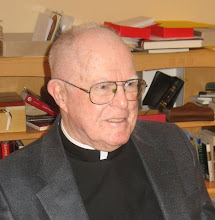
Monsignor Harry J. Byrne, JCD * * * Comment/contact:larchstar@aol.com

My Photo
Name:
Location: 5655 Arlington Avenue,, Bronx, NY 10471, United States

June 7, 2011

POWER? NO, THANKS. I'D RATHER HAVE INFLUENCE!

Mountains have from earliest times been associated with notions of divinity and mystery. The earth is seen as exploding upward from its foundations with an impulse of life, reaching upward to jagged peaks and heights as if somehow the sky itself is being sought. Mountains would be named after particular divinities. Mount Kailash in the Tibetan Himalayas was sacred to ancient Hinduism and Buddhism. Japan's Mount Fuji, named after a Buddhist fire goddess, has a Shinto shrine near its peak. Machu Pichu in Peru is the site of temples where Incan tribes worshipped their gods.

In Hebrew tradition there is Mount Sinai, where Moses received God's Ten Commandments. Mount Nebo, from which Moses viewed the Promised Land. The Temple Mount is sacred to Jews and Moslems. Jesus takes us to the Sermon on the Mount, the Mount of the Transfiguration, the Mount of Olives, Mount Calvary, and the mountain on whose peak Satan tempted Jesus with the aggrandizement of power.

Matthew's Gospel (4,1-11) places an extraordinary scene before us: the devil tempts Jesus with three proposals. What will Jesus base His appeal upon? The devil: Change these stones into bread: Bread for the masses. That's the way to go. Jesus rejects that approach. The devil then suggests that Jesus base his appeal on showmanship. Cast yourself down from pinnacle of the temple without getting hurt. Jesus rejects this and thus rejects using showmanship to attract people.

For his third temptation, the devil takes Jesus up into a high mountain and, with a 360 degree sweep of his arm, tells Jesus that He can obtain control and power of all this vision if He will embrace evil in the person of the devil. But any thirst for power and control is wholly alien to Jesus. "Come follow Me." "Blessed are the merciful, pure of heart, the seeker after justice..." The story of the wounded man on the road to Jericho; Jesus' spirited conversation with the Samaritan woman at Jacob's well. At the time of His arrest, Jesus told Peter to put up his sword. "My kingdom is not of this world." This Jesus does not seek to control and command.

Has the Church of Jesus, on occasion throughout history, forgotten that Jesus was not a command and control type? Did His Church at times warrant the picture, as Dostoyevsky portrayed it in the "Brothers Kamerazov" as the Grand Inquisitor, who fails to recognize that it is Jesus he is interrogating? Reforms of the Church in history have often succeeded in departing from abuses of power and the attempted control of others. The Protestant Reformation, in shaking off the controls of church governance and priestly celibacy, did this. Our Church is very much in need of new reform. The greatest scandal in its history, priestly abuse of young people and the failure of bishops to punish miscreants, is still very much with us.

Astute commentators have observed that such abuse is a misuse of power - by the abusers and by tolerant bishops. Has our Church become an instrument of misused power? There almost seems to be a frenzy in the last two pontificates to centralize authority of the papacy and to aggrandize its power and control. In 2002, national conferences of bishops were stripped of authority by Rome's decree that any proclamation by a national conference without a unanimous vote must be referred to Rome. Attempted expansion of papal infallibility became evident in papal insistence on "definitively defined" items being accorded practically the same acceptance as that given to infallible statements. The International Commission on English in the Liturgy, established in 1963, its members appointed by the English-speaking bishops, was high jacked by JPII with his new philosophy of translation. In 2002, members and staff of the ICEL were replaced by others appointed by Rome. Their new, heavily criticized, translation of the Roman Missal was issued in April 2010 and simply imposed on English-speaking congregations. The CEO of Caritas, an international federation of 165 Catholic charitable organizations, was Leslie-Anne Knight. According to custom, she was to be reelected for another term. However, B16 and his curia wanted a somewhat different philosophy to furnish its direction. In May 2011, Michael Roy was elected Secretary General.

The centralizing and control-seeking form of our Church's governance raises questions. Why, with all its power and authority, did its much touted command and control authority fail to command and control an inner evil, only to be discovered by outsiders, that would destroy its credibility and trust? Why is it so different from the person and manner of Jesus? It also is different from the leadership practices of many CEOs, university presidents, museum executives, and other leaders. In writing about their leadership principles, they agree that listening is all important. Listening to employees, staff, board members, customers, and the public is accomplished through feed-back practices, meetings, and just being readily available. Constituencies must be made to feel that they share a mission, a product, that they are being heard, an overriding philosophy that they have helped to shape. One business leader, decrying command and control organizations, called attention to the difference between power and influence. "Power? Thanks. I'd rather have influence. As a person of authority, I'm a teacher-consultant more than a wielder of power".

Is Jesus a wielder of power or is He a seeker of influence? And Jesus' Church? Does it give first place to use power to keep its authority or does it first look to contact and communicate with others and thus have influence? Like Jesus with the Samaritan woman at Jacob's well.

May 31, 2011

STARLIGHT AND STORM !

The 90 year mark which I hit last February was a time to celebrate these long years of life and 65 years as a NY priest. Celebrations took the form of several not-so- small affairs, which provided opportunities to chat that would easily be lost in one large gathering. So we had a family party at niece Kathleen's; a priests' gathering at St. Ann's, Ossining, where I spent the first ten years of retirement as Weekend Associate; a Sunday afternoon brunch with residents of the Ruppert Co-op, 650 units of "affordable housing" of which I was the organizer; a Deering family party - children, grandchildren, and great-grand children of long gone NYFD Captain Ray Deering. Ray was a dear friend. We met through the proximity of his firehouse, a few blocks from the Chancery where I worked. Quintessential New Yorker with tons of stories, like the description of the garb of the folks fleeing a fire in Greenwich Village!

Beginning in 2007, my blog has been reporting many colorful and fulfilling experiences I have had as a priest. I have also reported on how church governance has failed in protecting innocent priests, in installing Cardinal Law, driven from Boston by his priests and people for reassigning miscreant clergy, in a prestigious position; in removing Bishop Morris in Australia for his views on women priests and how no bishop, who reassigned abusers, has ever been removed.

The litany of hierarchical maladministration could go on and on. But it becomes tiresome and frustrating to complain for reform, where, in the hierarchy, there is no will to listen. So I will leave the problems of church governance to others and turn to positive considerations of spirituality. I take, as a beginning theme, the title of a book, "Meditations on the Peaks: Mountain Climbing as Metaphor for the Spiritual Quest" by Julius Evola.

The challenger of the mountain needs a discipline of the nerves and body, clear-minded courage, and an indomitable will. The mountain presents the individual person
with enormous beauty and mystery. Despite the menacing dangers of violent storms and avalanches, the mountain challenges persons of intrepidity and valor to mount the heights. God is our mountain. We are challenged by the mystery and majesty of God to enter into these higher realms of beauty and subsequent tranquility, but also of storms and fears. This is a land of starlight and storm!

May 10, 2011

RESPONSIBILITY DIFFUSED!

Since January 2007, I have posted 148 entries on this blogsite, Archangel. Some of these have celebrated bright accomplishments in the life and ministries of our Church as it tries to bring the heart and mind of Jesus to the world. Other posts have been candidly critical of many aspects of church governance. All that has been written here has come from a love of our Church and a desire that it be seen as a city on a hill. But two outrageous icons seem significant to me:

1) A few years ago, full page K of C magazine ads COME FOLLOW ME; then a photo of Benedict XVI and message, "Yes, we must come and follow Benedict".
2) Latest book by Benedict XVI on Jesus - cover photo of Benedict with caption, "THE LIGHT OF THE WORLD".

Heretical? I think so! Benedict twice steals the words of Jesus. Just a step away from Dostoyevsky's "Grand Inquisitor". Please, a humble Pope, a humble Church! Is this a problem?

Leadership tips from CEOs, university presidents, et al: "Listen to employees, staff, customers, boards of directors, the public"; "Make everyone feel they contribute to the organization, its culture, its product."; "Get feed back."; "Be collegial and consultative, not command and control types." "Have meetings, present goals, discuss tactics, don't have meetings where no one or few talk."

Some thoughts for bishops: "Be interfaith and ecumenical friendly; talk to fellow Christians, Jews, secularists, feminists, Unitarians; more importantly talk, to your fellow Catholics in Voice of the Faithful, Call to Action, and the like; don't keep them outside their church yards, meeting in Protestant and Greek Orthodox churches; send reps to their sessions; establish negotiable terms of discussion; they are not intruding on your turf - it's our turf; develop their human sense of belonging, don't think fences and walls"

Pope and bishops can no longer afford to diffuse responsibility as has been long a deplorable habit. Bishops are judged by pope alone; a more local judge is not available! For a bishop to be brought to justice is like a NYC cab driver able to be ticketed for a violation only by a US Supreme Court justice. The procedure kills the try for justice! The mantle of judicial immunity brings its wearer to a feeling of immunity from any criticism.

The bishops' National Review Board, consisting of outstanding Catholic lay personalities, in its February 2004 report was severely critical of the bishops: priests, but no bishop, were subject to punishment for violation of the Dallas Charter; the crisis was caused by the bishops failure to follow Canon 1395 ordering punishment, not therapy, for child abusers; damage to children was exponentially multiplied by bishops, who reassigned miscreants; bishops may well have had a conflict of interest in protecting themselves by agreeing to multi-million dollar payments and selling off church properties to pay damages; about the failures of bishops that brought grand juries and courts into the picture, the NRB report had this to say: "In the Board's view, any agreement between a diocese and civil authorities, in which the diocese gives power to the civil authorities to oversee the diocese, is a troubling infringement of the First Amendment's guarantee of the free exercise of religion." History tells of many examples where Church and Pope steadfastly resisted such incursions, even to the point of deposing emperors.

These are serious charges, indeed,and it is understandable that some bishops were angered to be so taken to task. Our own Cardinal Egan, refused to offer the customary Mass for NRB members on their official visit to NY. Egan publicly disinvited Board members for a celebratory dinner held by chance at the time of their visit. In November 2004, Egan and three other bishops tried, thankfully without success, to delay and, perhaps, block the funding of the annual audits required by the NRB. In its report, the Board cited the violation by the bishops of Canon 1277, which requires the review and approval by the diocesan finance council for certain large payments. The Board pointed out that had the bishops complied with this canon, the large expenditures would have been questioned and their reasons disclosed to view.

Some board members have expressed dissatisfaction with the arrogance of some bishops. Former Oklahoma Governor, Frank Keating, described some bishops as "Mafia types". Illinois Supreme Court justice Anne Burke, after her term was up, has been giving lectures on the abuse crisis and the difficulties posed by many bishops to the Board in performing the duties entrusted to them. She said on one occasion that the NRB should be dispanded. I had been invited to provide a deposition to the Board. In Washington, I spent over three hours with Board member Robert Bennett, President Clinton's attorney in the impeachment affair. His questions showed a deep understanding of the crisis. He also observed that he could not understand the hostility and arrogance of some of the bishops towards him, given the time and loss of income he had experienced from his work on the Board. Out of frustration dealing with bishops, Anne Burke and Robert Bennett, with excelkent diplomatic connections, flew to Rome and met with then Cardinal Ratzinger with whom they discussed the situation. On their return, Bishop Gregory Wilton, Chief of USCCB told them they should have had permission for this trip, stating "even bishops need permission". Burke replied, "We are not bishops!".

With the abuse crisis very much with us, it would be appropriate to look again at the Feb 2004 NRB report. It is the most objective view to date of where accountability lay - in the past and, perhaps, into the future. Openness, not resistance , to criticism is a quality of the leadership needed to address the continuing crisis. In a recent Op-Ed in the Chicago Tribune, entitled "Can the Bishops ever be Trusted?", Anne Burke pointed out that the bishops had not followed the recommendatins of the Board. As subsequent events proved, the recommendations would have avoided some missteps that ensued and would be helpful in the future.

May 4, 2011

THE DANGERS OF FIXED IDEAS!

Alan Greenspan, former head of the Federal Reserve Bank, was opposed to government regulation of business, believing that the free market would itself self-correct its problems. The financial collapse in 2008 and continuing on proved him wrong. It was caused by many factors, chief among them, Greenspan's fixed idea that regulation was a bad policy. Regulation should be treated as a no-no, "Don't even think about it!" A fixed idea to be honored above all was at the heart of the problem.

Church authorities, Popes and bishops, have a fixed idea about the Church. It is almost divine, incapable of doing anything wrong. It is to be honored and preferred ahead of everything else. Priests are abusing children and bringing dishonor on the Church. Oh, no! That can't be. Anti-Catholicism is behind this talk. Lawyers are drumming up such cases to make money. This abuse simply doesn't really exist. Popes and bishops tried for a long time to deny or cover up what, to them, was unthinkable. They put concern for the Church (and self-concern) ahead of everything, even the innocence of children.

But it was not unthinkable. It took the press, trial lawyers, district attorneys, and grand juries to show the brutal reality. But, even then, some would hold on to that image of Church. Cardinal Bevilaqua could still hold it after the 2005 Philadelphia grand jury findings and keep miscreants in ministry. And Cardinal Rigali, after the 2011 grand jury report, announced, "There are now no abusers in ministry." A week later, Rigali was forced to remove abusers still in ministry!

Pope John Paul held on to his fixed idea. When Cardinal Bernard Law, poster boy for reassigning abusers, was driven from Boston by his priests and people and, perhaps, to avoid a subpoena, JPII made him Archpriest of a prestigious church in Rome with a six-figure income and retained him in vetting candidates for appointments as bishops! Cardinal Bevilaqua and Pope John Paul II still "didn't get it", still maintained the fixed idea "Put the Church ahead of everything, including innocent children and, now more recently, ahead of falsely accused priests".

And now, Cardinal Rigali, under fire from press and the public for his mismanagement, was appointed on April 18 by Benedict XVI to be his special representative at a ceremony on June 18, 2011 honoring St. John Neumann in the Czech Republic. What is this all about? Does Benedict not understand how the faithful and the public will interpret this accolade for Rigali? Does he care? Does Benedict misunderstand child abuse as John Paul did when he rescued Cardinal Law from Boston? Do these two popes and two cardinals still accept the fixed idea at the heart of the problem: "My Church preferably right, but right or wrong, my Church!"

There is solid reason to think that the two popes "still don't get it". John Paul rewarded Cardinal Law, who exponentially multiplied the numbers of damaged children by reassigning abusers. Benedict conferred a special mission and honor on Rigali at the very time Rigali is shamed by the Philadelphia grand jury and calls for his resignation are being made. How unfortunate it is that these popes, with their fixed idea of a glorious and beneficent Church, can honor two cardinals, who, however unwittingly, caused injury to thousands of children. Both popes apologized for the sins of abusing priests. But the bad personnel management by many bishops has invariably been described by both popes in using the passive voice: "The matter was badly handled!" The harsh reality must be faced: the sins of abusive priests are outrageous; but the $2 billion of the faithful's contributions were paid out for settlements and court judgments for mismanagement by many bishops. When popes and bishops dispel the old Church-protective fixed idea, the way is open for salutary reform.


aw

April 15, 2011

IS IT A CITY ON A HILL?

The landscape on which our Church is situated is like a fog-shrouded moor in a Victorian novel. The lights have gone out at the top. Leaders in finance, education, and government tell how important it is to listen. To employees, management, board members, customers. One CEO favors large meetings because, he says, you have more people to listen to, who may come up with creative thinking. Being a leader involves having a vision of goals, communicating that vision to others, and instilling in others the notion that they have a real part in shaping the culture and the end product of the enterprise.

Our Church is not in a listening mode. It tells practicing Catholics, like those in Voice of the Faithful, Dignity, and Call to Action to go away. They are placed outside our walls. Please get off our turf. We are a command and control institution; not a voice that shares, accommodates, and persuades. We don't have to listen; we have the truth. The Vatican, with its appetite for control, increasingly centralizes church activities the better to dominate them. A few years ago, national conferences of bishops were emasculated by being required to show unanimous consent to authorize something in their own name; otherwise it must be refered to Rome. Under John Paul II and Benedict XVI, the old magisterium of the theologians has become the magisterium of the pope. This was a naked effort to broaden the scope of papal infallablity and it was used to disarm liberation theologians and saintly bishops like Romero of El Salvador, Arns of Brazil, and Sam Ruiz of Mexico. The Vatican a few years ago dismissed the board and staff of the English translators of the Missal and replaced them to change the direction of the translations. Opponents of the new English translation of the Missal in the US, South Africa, and Ireland are simply not heard. International Caritas has its CEO changed to accomodate a new direction of policies.

B16 has had his share of gaffes: a speech in Regensburg that angered Muslims; upsetting the Jews by reaching out to the Lefebre schismatics, one of whom denied that the Holocaust ever occurred. More recently, the CDF issued an announcement that placed pedophila and ordination of women as having equal gravity. This pairing created an outcry. And finally, the beatification of JPII is coming on express tracks in May. He is the pope who placed Cardinal Law as rector of Rome's St. Mary Major's Basilica with a six figure income after Law had been driven from Boston by his priests and people for his history of reassigning priests who abused the young. After meeting with US cardinals in Rome in the fall of 2002, JPII declared that the Church would help society in addressing the abuse problem. He seemed not to understand that the abuse problem had been brought to the attention of the Church by secular society in the persons of the press, district attorneys, and trial lawyers.

With the Church enshrouded in a fog-draped moorland, I shall turn my future blog notes to the brighter lights of some experiences and personalities I have encountered as a NY priest for some sixty-five years.

April 1, 2011

GOVERNANCE IS THE PROBLEM!

The Philadelphia Grand Jury report of February 10, 2011 was profoundly upsetting to the public and to the Catholic community. Cardinal Rigali had pledged, together with all the other US bishops, to abide by their 2002 Dallas Charter, which required dismissal from ministry of any priest with even one credible allegation of abuse. This Grand Jury had found that a number of such priests were still in active ministry in Philly. Cardinal Rigali, in response, declared that no such abusers were still in ministry. Six days later, he removed twenty-one. Three priests and a lay teacher were charged with abuse and arrested. Monsignor William Lynn, Vicar for Clergy, was charged with endangering the welfare of children and was arrested. Will he be a sacrificial lamb to save the cardinal whose policy he followed?

The report also describes a similar Grand Jury report in 2005, which pointed out alleged abusers. But they could not be prosecuted because of statutory limitations. It had been thought that the 2005 report would have been a wake-up call. The 2011 Grand Jury found it otherwise and lodged severe criticism against Cardinal Rigali and his predecessors, Cardinals Bevilaqua and Krol, in that they knew of the abusers but did not oust them from ministry.

Both Grand Juries have indicated that the motivation of archdiocesan officials in removing or reassigning an alledged abusing priest lay in the danger of scandal. There appears no reference to possible danger to children as a cause of concern. Investigations by Church authorities as to what went wrong in Philadelphia will be anxiously awaited.

I suggest that the underlying problem to be addressed is one of governance. Not only have acts of abuse been covered up and miscreants secretly reassigned. The real cause is constantly covered up. It is not acts of abuse. It is the failure in governance of those bishops who did the cover ups and reassignments of miscreants. This cause is constantly pushed aside. John Paul II and Benedict XVI have invariably used the passive voice when it comes to who caused the problems. "The problem of priestly abuse was badly handled." "Priestly" is used; but "badly handled by bishops" has never been said by our two popes, to my knowledge. Not one cent of the $2 billion paid out was for the sins of priests, but in every case of court judgment or settlement, payment was for mismanagement by a bishop. $2 billion! JP II showed profound misunderstanding of the crisis in taking Cardinal Law, driven from Boston by his priests and people and, perhaps, to avoid indictment and installing him to a prestigious church in Rome with a six figure salary and a position on the entity that selects bishops. Law was poster boy for secret and multiple reassignments of miscreant clergy. He was protected and honored by JPII, who is now on the express train to beatification.

The bishops'own National Review Board understood the real causality that escaped mention by two popes. They used these words: "bishops engaged in massive denial."; "general lack of accountability of bishops."; "serious failings of some bishops caused the exercise of state authority over Church matters."; "the bishops'attempt to deflect criticism from themselves onto individual priests." This harsh criticism by the NRB angered many bishops as e.g. Cardinal Egan, who attempted to stop NRB funding at one point and explains his hostile attitude to them on their visit to NYC.
Board members showed their displeasure with the non-cooperation of many bishops: Chairperson Frank Keating, former governor of Oklahoma, termed them "Mafia types". His successor, Ann Burke, former Chief Justice, Illinois Supreme Court, on completion of her term, went on lecture tours, describing how many bishops interfered with their mandated work. I was invited to give a deposition before the NRB. In Washington, I was interviewed by Board member Robert Bennett, President Clinton's personal attorney. He candidly complained to me about his irritation at giving up time and income only to be met by anger from some bishops.

The hostility of so many bishops to criticism may be related to their immunity under canon law from judgment or supervision by anyone less than the pope and his CDF. When have we ever seen the pope crack down on a bishop for the mismanagement, which the pope himself described in nameless passive voice? When Dublin Archbishop Martin persuaded some bishops to resign for their involvement in the crisis, Pope Benedict refused to accept their resignations. Don't anyone step on my turf!

In the view of many, the Vatican's appetite for control seems excessive. JP II in his Synods of Bishops diminished the collegiality of bishops, so encouraged by Vatican II.
The USCCB was hamstrung, I think it was in 2002, by papal decree that decisions of national conferences had to be unanimous to have force. Otherwise, to Rome. Control is the name of the game. Rome hijacked the ICEL after decades of its work, appointed new members and imposed a questionable translation of the Roman Missal on the English-speaking faithful. Caritas, an international agency, of which our CRS is a part, was to have its highly regarded chair, a Ms. Knight take another term, as was customary. The Vatican made a different appointment. JP II, in his effort to expand papal control, tried, according to some, to expand the scope of infallibility by introducing a new phrase: the "magisterium of the Church".
In addition to reducing the clericalism and centralization of Church authority now abounding, a new way of thinking might well lead to an invigorated Church. Example: In November 2002, JPII and the US cardinals, after their meeting in Rome,issued a statement, which among other items, declared that "priestly celibacy" had nothing whatever to do with the abuse crisis. Obviously, an attempt to defend priestly celibacy at all costs! No studies had ever been made. But they had the conclusion. Very much like the time of Galileo. Church authorities had the Bible stating that the sun stood still. No need for research and study! Galileo was wrong! A priori thinking has its place. But it is no substitute for research and experience. Many feel it is too prevalent in Vatican thinking.

These thoughts are to encourage policies and thinking that can be helpful as we try to wend our way through today's maze. Back to the simple Christian faith; remove the encumbrances that block the view of Jesus. Just off the top of my head, indulgences and canonizations. How about some other examples? What do you think of the above observations? Other thoughts?

March 18, 2011

NINETY YEARS - AND COUNTING!

February 7 was a milestone birthday - ninety years of age! I give thanks to the Almighty God for these lively years of life in a world of some dark clouds but an abundance of sparkling stars. I give thanks for sixty-five years as a priest of New York. It has been a fascinating journey with a multitude of enriching relationships, beginning with Harry Theodore Byrne and Marie Whelen. Dad is remembered for his buck and wing dance, his songs from Gilbert and Sullivan's "H.M.S. Pinafore", and from Shakespeare's "Julius Caesar", "I had as lief not live, as live to be in awe of such a thing as I myself." There was on the daily breakfast table, a box of corn flakes with a graphic of a slender woman, labeled "The Sweetheart of the Corn". I took it as an icon of my mother.

Brothers Bill and Jeb followed me at two years intervals, and then Mary, five years later. She was born in St. Elizabth's Hospital. On a visit to see the new family member, I recall, seeing out the window, the George Washington Bridge, then in construction. It was 1930. Mary died in 2003 in Calvary Hospital. By her side then, I could see out the window the Throgg's Neck Bridge. Bridges as metaphors at the beginning and the end of her life!

Great experiences at Murray Avenue School and Mamaroneck Junior High School and then at Iona Prep, lunchtime visits to the Blessed Sacrament. As altar boy at St. Augustine's, the tulip tree outside the sacristy window is a fragrent memory. So, too, sacristan Sister Jean Imelda! As a boy, I delighted in the high Masses, afloat in incense smoke, and the funeral Masses, three priests in solemn paces. Dignity, solemnity, reverence, then the jaw-dropping "Dies irae" with its soaring "tuba mirens spargens sonem per sepuchra regionem". And as the body is led down the aisle, "In paradisum deducant te angeli". Monday evenings with the Miraculous Medal devotion, its incense smoke, the "Tantum ergo sacramentum" and the direct sense of adoration were compelling, indeed. The only dark clouds in these early years relate to the Sacrament of Penance. Our parish priests were exemplary. Their example led me to this vocation. But they and most confessors in those early years were not helpful to boys as they experienced puberty. Ordinary experiences of a boy's developing sexuality incurred a sense of sin towards what was thoroughly natural. Confessors with a Jansenistic fear of sex reinforced that sense of sin by giving absolution and failing to point out the lack of any sinful quality in these normal functions. Silly advice was sometimes given. "Take cold showers; read spiritual books." Hey, padre,that don't work.

During the years of Cathedral College and St. Joseph's Seminary, we lived in a context of Catholic intellectual coherence. We heard Fulton Sheen's Catholic Hour on Sunday radio. In our reading we encountered G.K. Chesterton, Martin Cyril D'Arcy, Gerard Manley Hopkins, John Courtney Murray, and an array of French intellectuals: Jacques Maritan,Francois Mauriac, and Leon Bloy. Seminary experience was fruitful as to theology and liturgy. The strong statues of Peter and Paul in the chapel delivered a message, that was unforgivably lost when the statutes were taken away and a Madame Tausad's-like wax-work images were installed and the colorful scenes within the apse were painted over with blank white, yes, blank white.

First indications of leadership failure came to us seminarians from the performance of two professors,one sadly incompetent, the other, I believe, certifiably afflicted with a personality disorder. Complete failure on the part of leadership was evident in the lack of evaluation, no effort to seek student reaction, and no professional decision-making to explore reasons for terminating them. Aside from these two, our seminary professors were splendid.

Twenty years service in the NY Chancery followed three years of graduate study in Canon Law at Catholic University. Each of these chapters would require too much computer ink and blog space, as also would my years as pastor at St. Joseph's, E. 87th St. and Epiphany at E. 22nd St. On retirement at 75 in 1996, I served as Weekend Associate at St. Ann's, Ossining, a remarkably happy tour with a great congregation and pastor.

Now, in retirement, I have been working as a canon lawyer with priests accused of sexual abuse of minors. My earlier happier vision of our Church has become highly critical. My last post (February 28) described the unjust dismissal of an extern priest from ministry by a bishop, who also defamed him. And no appeal! This case, other examples, and a wide knowledge of the sex abuse crisis has lead to my views as to the causes of the crisis and the reforms of church structure that are needed. In my next blog post, I shall attempt to describe these.